USC · Product strategy · Team concept

Peel — making stress responses more understandable

An exploratory wearable concept pairing a non-invasive sweat-sensing patch with mobile check-ins to help people better understand patterns in their stress response.

Type
Academic concept · Team project
Focus
Product strategy, wearable experience, and business model
Status
Exploratory concept
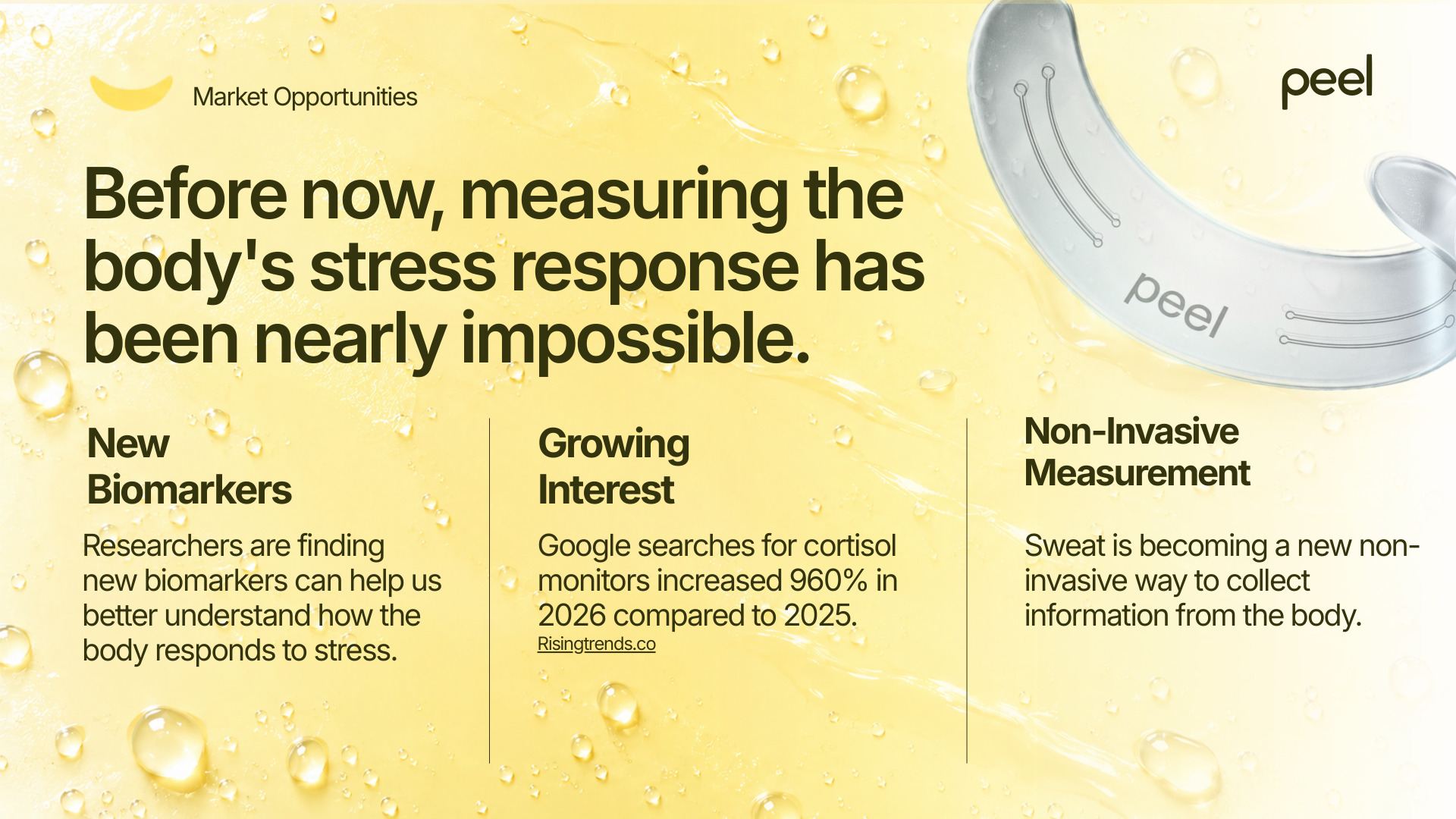
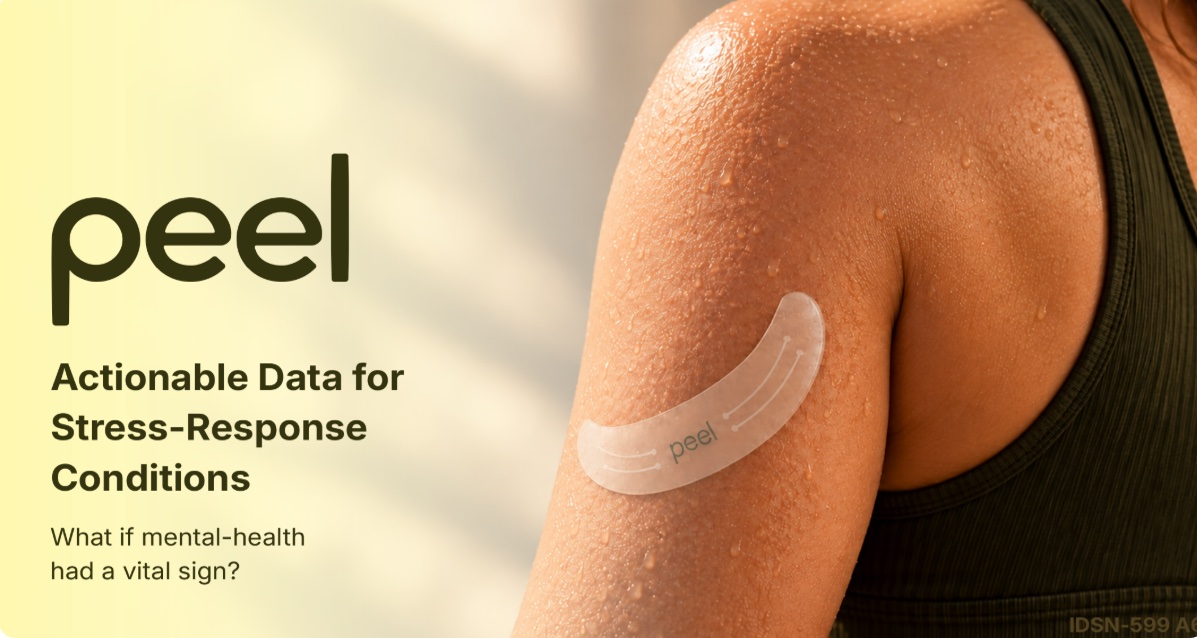
Peel concept artwork showing a translucent wearable patch on an upper arm.

My contribution

Presenting the Peel concept

I brainstormed with the group on Peel and made myself available for team meetings, even on weekends.

I worked on four slides for our team's Peel presentation. I wanted someone seeing Peel for the first time to understand what it was, how they'd use it, and why we thought it was worth exploring.

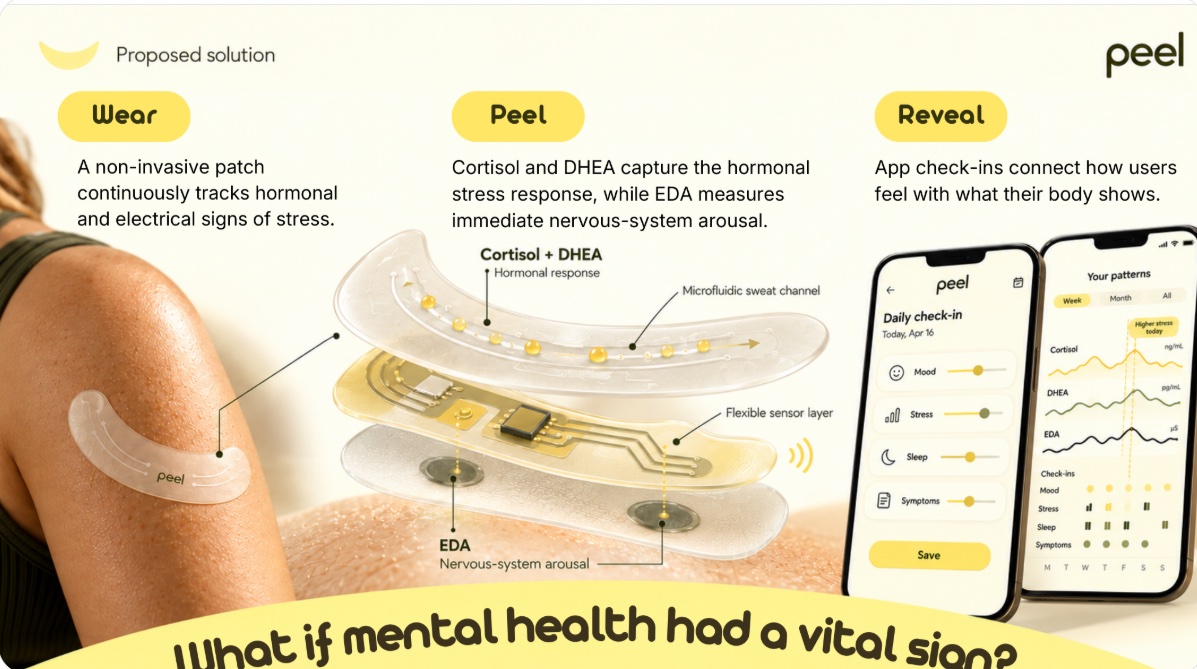
  • The idea. I helped introduce “Wear, Peel, Reveal” and explain how the patch and app would work together.
  • How it would work. I helped walk through what someone would do: put on the patch, check in on how they're feeling, and use the app to look for patterns.
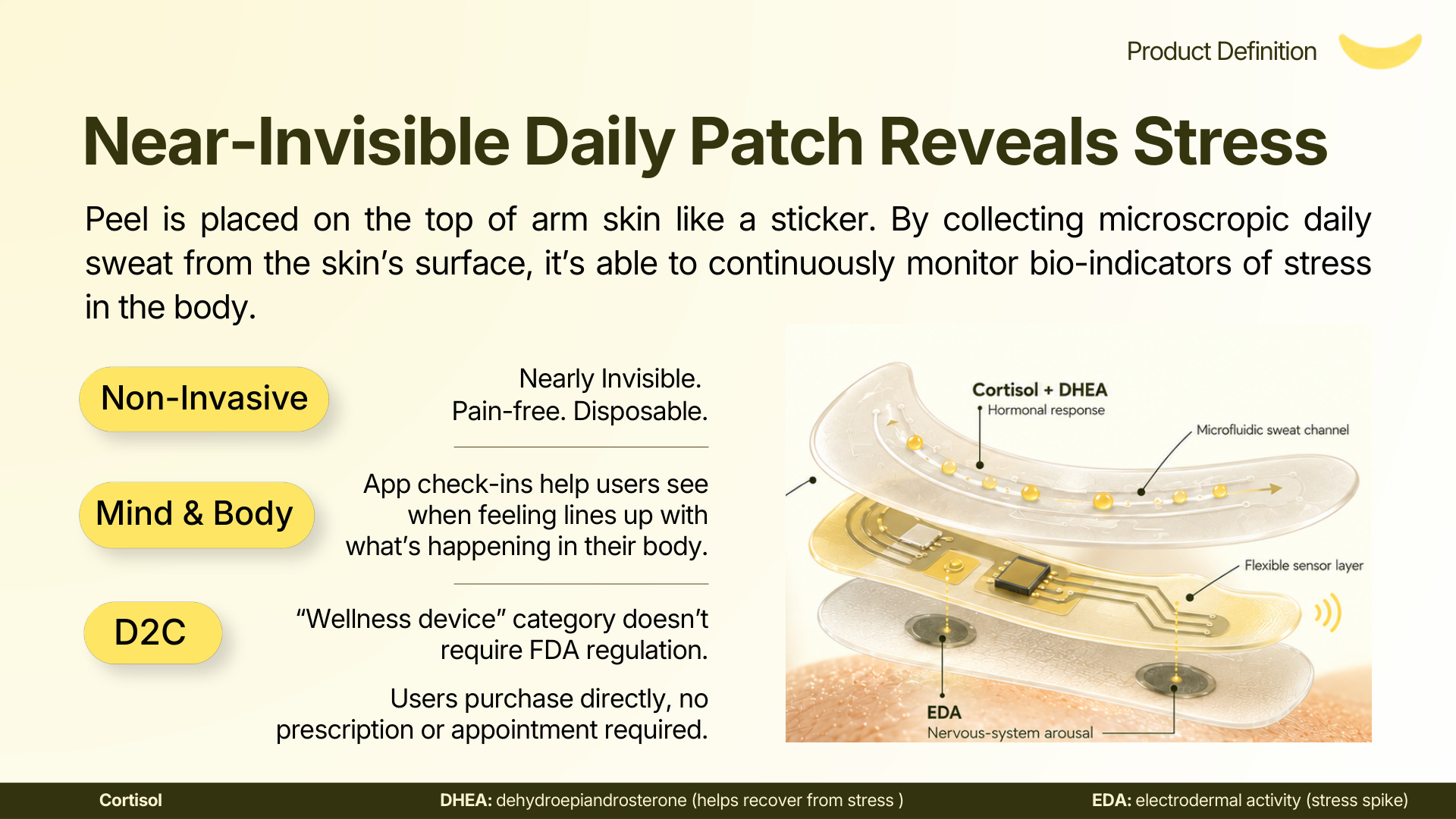
  • Why we explored it. I helped explain why we looked at sweat as a way to collect information about stress without a blood draw.
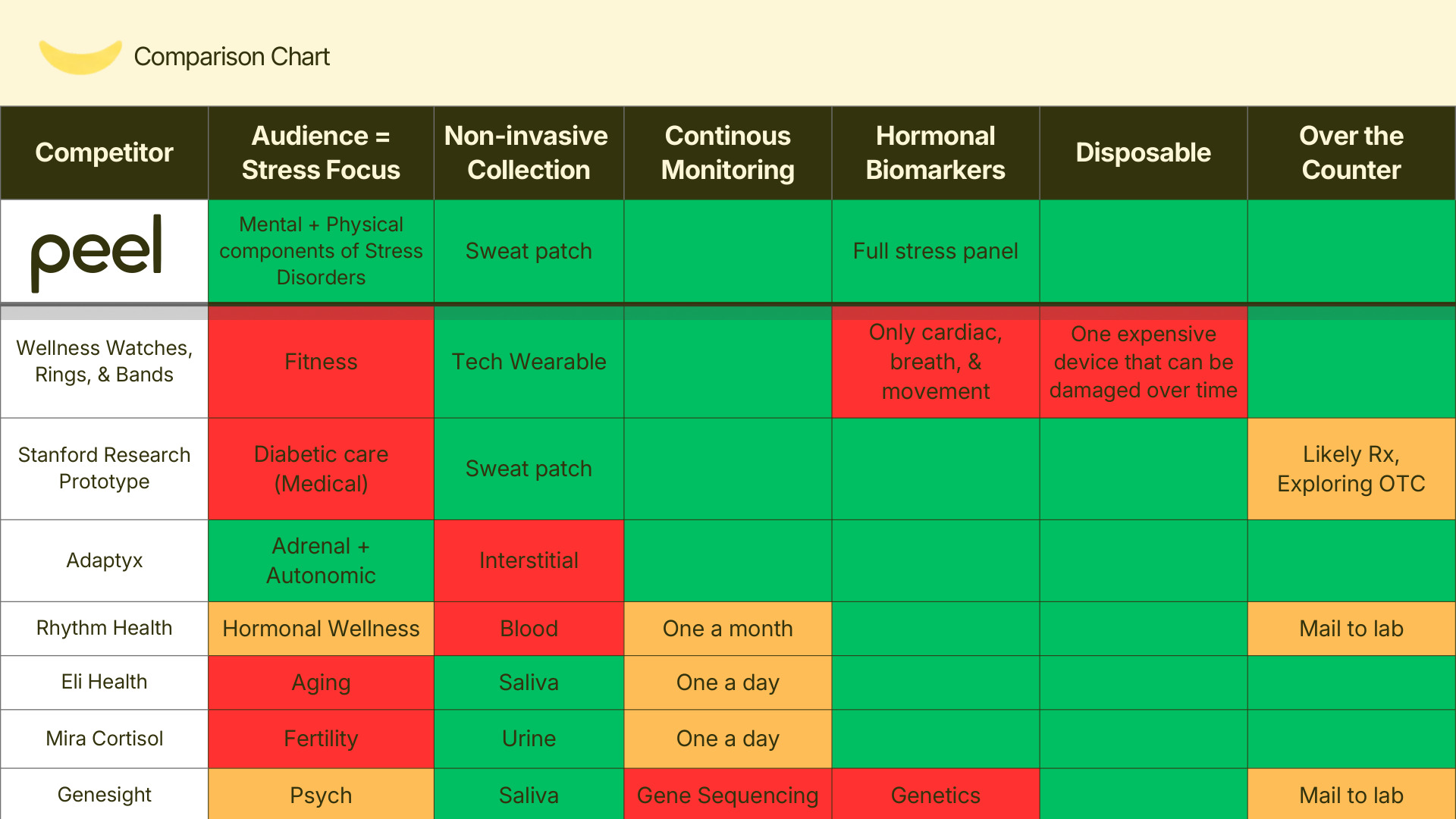
  • Where it might fit. I helped compare the patch with watches, rings, and other tests. We looked at what each option measures, how it collects that information, and how often it takes a reading.

Comparing Peel with other options got me thinking about how someone would use it on a regular day. A patch you can wear while going about your day seemed easier to fit into a routine than a test you have to stop and take.
Problem

Making stress-response patterns easier to understand

Our team explored the difficulty of connecting symptoms and triggers when experiences overlap and information is inconsistent.

Proposed solution

Wear. Peel. Reveal.

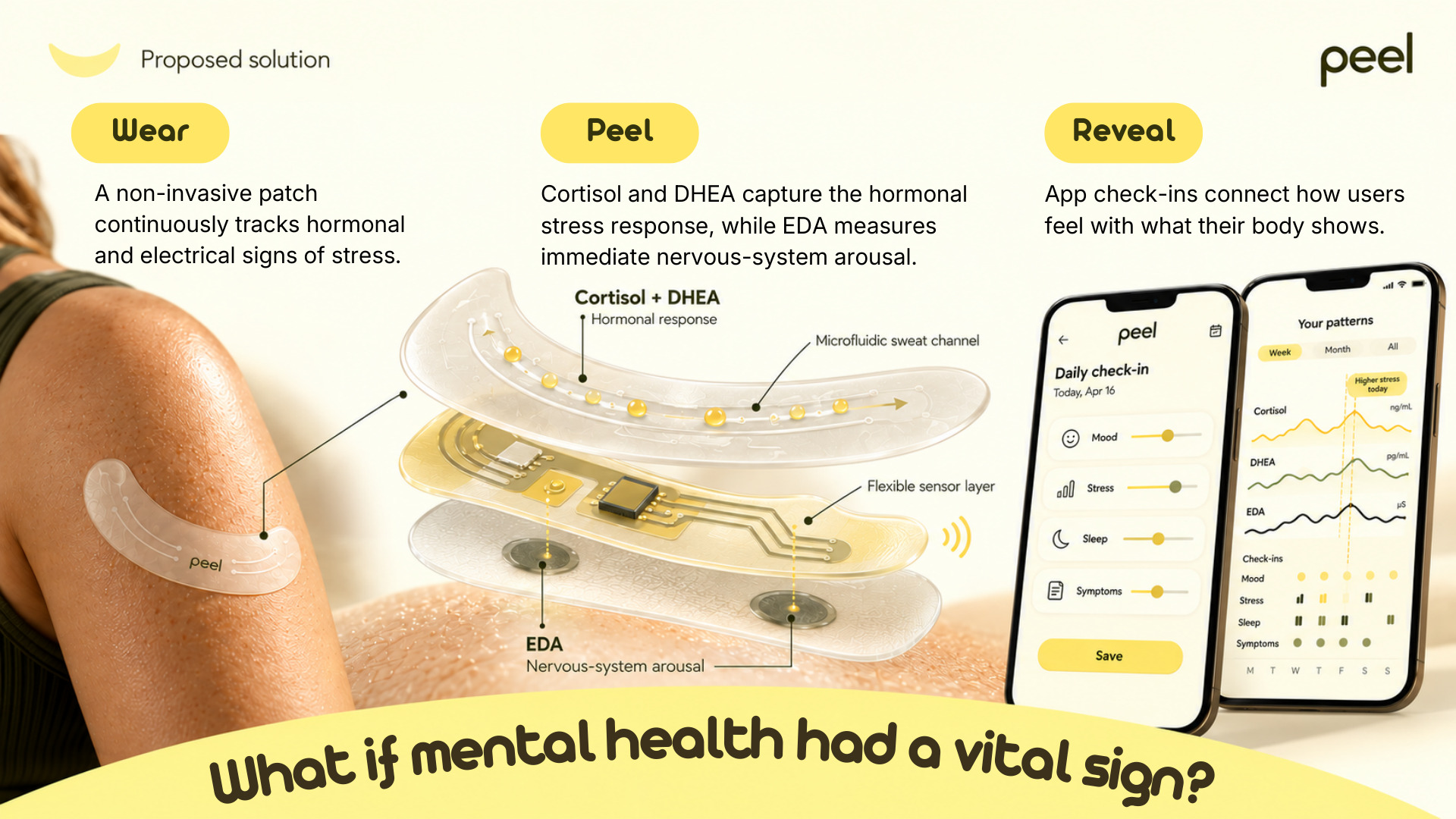
The team proposed an adhesive patch paired with brief mobile check-ins. The app concept explores how people might connect how they feel with the patterns the proposed wearable would measure.

Concept slide showing the wearable patch, its layers, and two companion app screens.

Opportunity and positioning

Finding a place in the wearable landscape

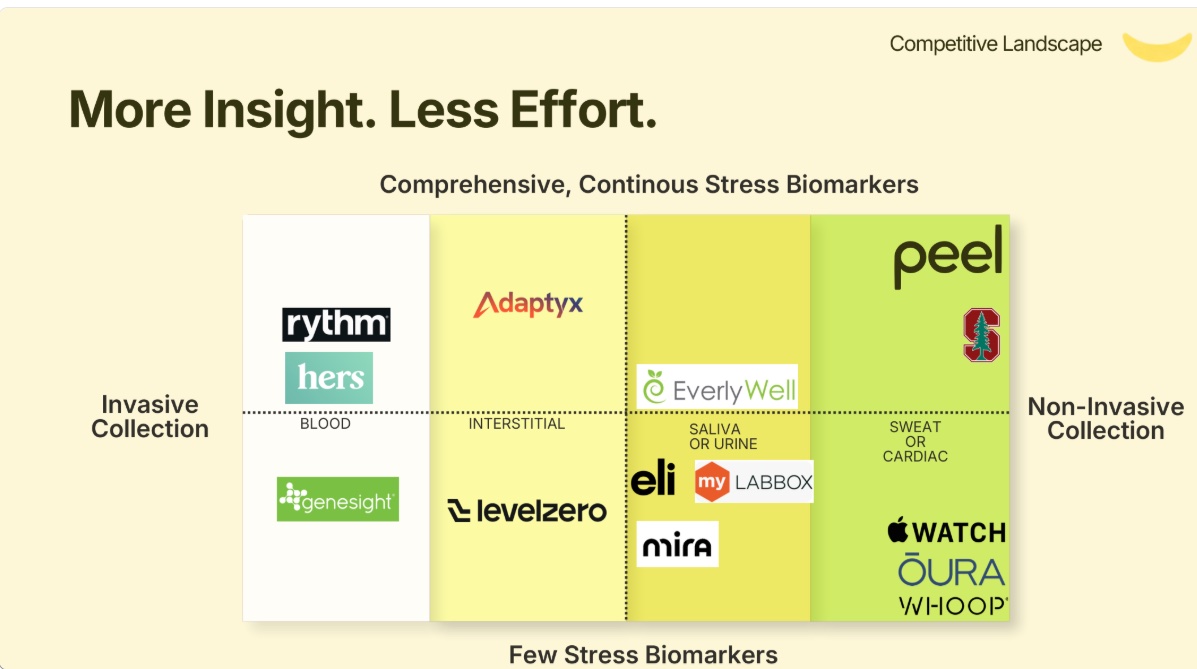
The group compared watches, rings, saliva-based tools, and emerging sensors. The comparison informed the team's focus on convenient wear and interpretable feedback.

Team research matrix comparing wearable concepts by collection method and breadth of measures.

Product thinking

Connecting the physical and digital experience

Daily check-ins and visual trends were central to the app concept. The team also considered sensor feasibility, user trust, privacy, interpretation, and affordability.

Business considerations

Exploring a go-to-market plan

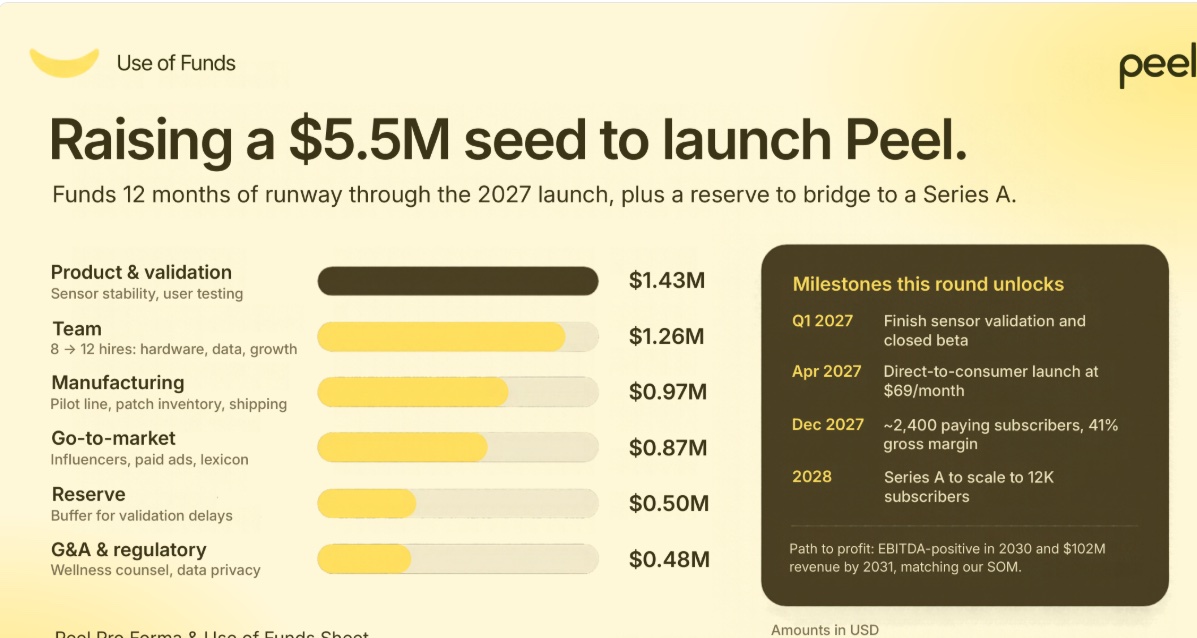
The team modeled a direct-to-consumer subscription, a possible seed round, and development milestones as planning scenarios.

Team planning slide outlining proposed seed funding allocations and milestones.